Event

Theory of the UnforeseenPost an Event »

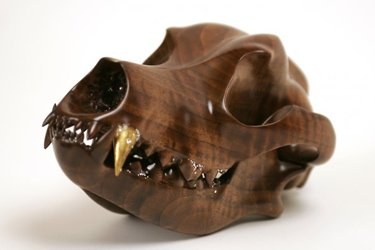
Theory of the Unforeseen Laurel Roth, Man's Best Friend, Great Dane, 2008
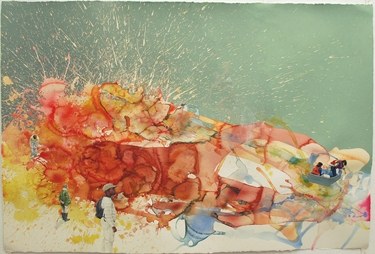
Gallery Reception: September 03, 2009, 6:00 to 9:00 pm Laurel Roth and Mary Anne Kluth are both fascinated by the process author Michael Pollan describes as “reductive science,” or the act of breaking components down or simplifying them for ease of understanding and analysis. Kluth’s paintings embellish on the almost classical romanticism of radio astronomy or the Search for Extraterrestrial Intelligence (SETI), while Roth’s sculptures meditate on the mundane “manufacturing” of food animals or the use of beauty-shop “plumage” in human mating rituals – both artists dig deeply into the often conflict-ridden boundaries between natural processes and human culture. Roth's new works examine the ways that science has enabled industrialized farming to manipulate humanity's place in a larger ecosystem. Using hardwoods carved and polished by hand to a perfect Brancusi-like finish, she meticulously recreates the largely unseen remains of food animals such as cows and pigs. Embellished with Swarovski crystals and gold leaf, and presented like relics, these bones celebrate the very evidence of selective breeding omitted in discussions of the current system of food consumption in the United States. A large pair of fighting peacocks (one with colorful plumage and one albino), made entirely from beauty shop false fingernails will occupy the gallery’s center, perhaps her most ambitious sculptural project to date. From quite small to huge, Kluth's new paintings depict the dissonant relationship between humanity and landscape that can result when one focuses closely on empirical perceptions. Contrasting loose, spontaneous mark-making with obsessive techniques and photo-realist depictions in watercolor on cut card, the resulting images relate the tragic romanticism of radio astronomers and SETI searchers, individuals that spend much of their lives staring at computer models of places and events impossible to directly experience. Other paintings evoke comparisons to volcanic explosions, firework displays, supernovas and geological events through innovative chemical reactions, the use of gravity, “stone-pooling” of mineral pigments and collaged card cutouts. A 20-page catalogue is available with an essay by Glen Helfand, writer for Artforum and numerous other publications. He teaches contemporary art courses at California College of the Arts, San Francisco Art Institute, and Mills College, and has organized group and solo exhibitions for various museums and galleries, including for the de Young Museum, San Jose Museum of Art, and Mills College Art Museum.
Theory of the Unforeseen Mary Anne Kluth, Ornithological Biography, 2008