Event

A LegacyPost an Event »

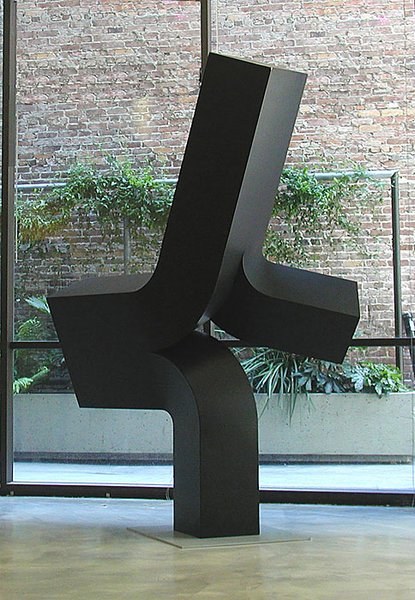
A Legacy Meadmore, "Upright"
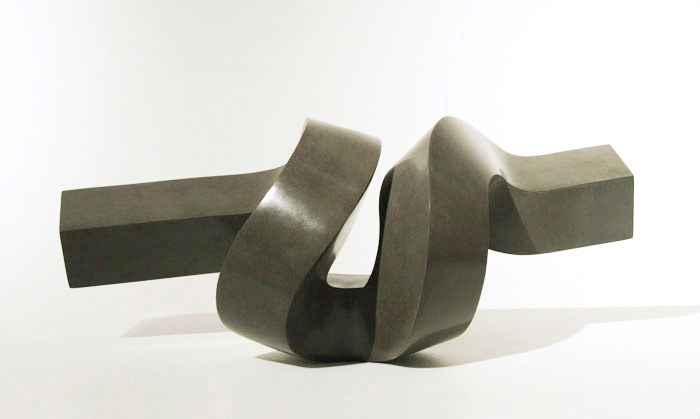
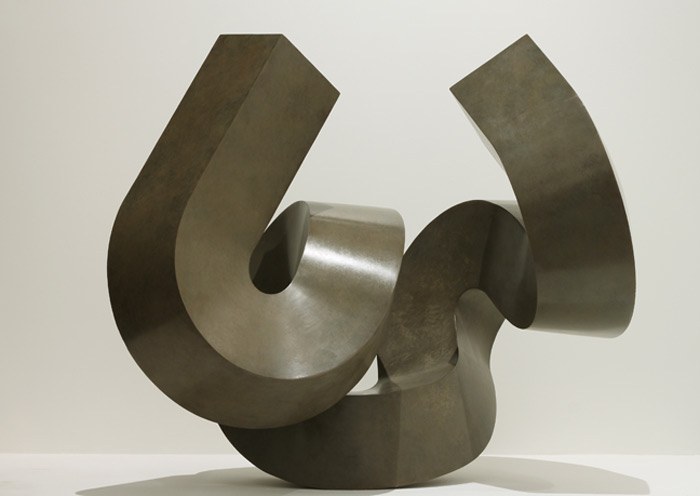
Sculpturesite Gallery is pleased to present A Legacy, an exhibition celebrating the sculptural accomplishments of the late Clement Meadmore. The show runs from April 1st – June 5th with an opening reception on April 15th from 5:30 to 7:30pm. Clement Meadmore, who died in April 2005, was best known for the massive public sculptures he created for over three decades which, in spite of their sheer mass, maintain a bold dynamic quality and a human warmth that belie their heft and geometry-based origins. They sometimes appear to soar weightlessly and precariously into space or have the pent-up energy of coiled springs, revealing the artist’s extraordinary sense of design and his genuine sense of humor. With their stark power and smooth, black-painted surfaces, Meadmore's sculptures combined Minimalism's devotion to pure geometric form with the evocative powers of Abstract Expressionism. They were also influenced by the rhythms and improvisational quality of jazz, an art form he passionately admired. His best pieces are studies in line, form, movement and balance, and although the monumental scale was often the artist’s ultimate goal, the maquettes and garden size works in bronze and painted aluminum are just as cohesive, energy-charged and lyrical. Works representing each size in the Meadmore repertoire will be exhibited. Pieces such as “Wave” and “Riff” show Meadmore ability to capture the essence of power and stability even in maquettes. Contrastingly, in medium works such as “Tantamount” and “Frolic,” Meadmore transcends the power inherent in the material. They move and rise with effortless grace and delicacy. The garden-size, “Reach” shows the full intension of this master sculptor as he balances the tension of the two contrasting forces of unbending strength and elegant movement. Clement Meadmore was born in Melbourne in 1929. He studied aeronautical engineering and industrial design. In the 1950's, while working as a furniture designer, he made his first sculptures. While visiting Belgium in 1953, Meadmore saw an outdoor exhibition of modern sculpture that inspired him to begin welding. He later embarked on planar constructions using sheets of welded steel in which he attempted to evoke Franz Kline’s gestural black on white abstract paintings. In the mid 1950s, Meadmore began producing sculptures that prefigured his mature works and departed from the Constructivist tradition in that they consisted of manufactured hollow volumes and had a greater mass and bulk. In 1963, Mr. Meadmore resettled in New York, where he met the painter Barnett Newman. Inspired in part by Newman's uninterrupted expanses of saturated color, Meadmore’s sculptures gradually became austere, denser forms. In spite of the appearances, Meadmore distanced himself from the Minimalist movement. “It’s making some didactic point about what you see is what you get, but it is not really developing a new form of language”. He did agree with the Minimalists’ adherence to the concept of gestalt perception, the idea that a sculpture should be knowable in its entirety from any one point of view. In the break-through work Bent Column (1966), Meadmore began using a single, uninterrupted volume that is square in section, tilted on its axes and integrates curved elements. He later elaborated his vocabulary of modules, basic units of square section forms shaped by specific torsion, which he would continue using throughout his life. Meadmore’s work is displayed on the campuses of Columbia and Princeton Universities and at the Empire State Plaza in Albany, and is part of the permanent collections of the Metropolitan Museum of Art, the Art Institute of Chicago, the Corcoran Gallery of Art, the National Gallery of Australia, Tokyo Metropolitan Art Space, and many other museums and institutions on three continents. He wrote several books, including ''How to Make Furniture Without Tools'' (Pantheon, 1975) and ''The Modern Chair: Classic Designs by Thonet, Breuer, Le Corbusier, Eames and Others'' (Dover, 1997 – first published in 1974). His work was the subject of a book by Eric Gibson, ''The Sculpture of Clement Meadmore'' (Hudson Hills Press, 1994).
A Legacy Meadmore, "Riff"
A Legacy Meadmore, "Reach"