Event

Measure without MeasurePost an Event »

Measure without Measure
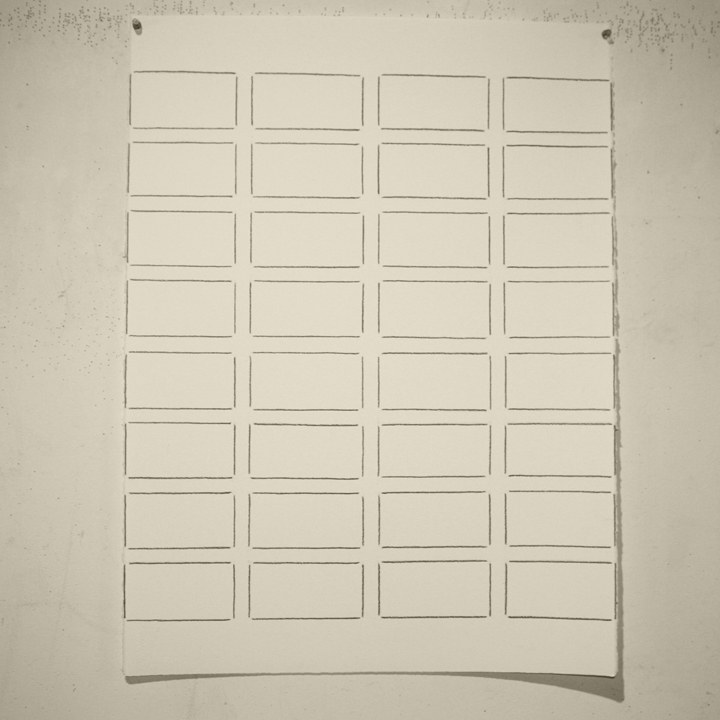
Reception for the artist: Friday, September 16, from 5:30 to 7:30 pm Artist’s Talk: Saturday, September 17, 2011 at 2:00 pm. The Directors of Cain Schulte Contemporary Art are pleased to announce a solo exhibition of new work by Linda Karshan. For this third solo show with the gallery, Karshan has created two new bodies of work, both extremely coherent, with more complexity and more division in their forms than in the past. In them, the viewer can share her sense of time and space, and witness the act of creating space by defining the breadth of one’s essence. Linda Karshan’s reputation as a highly original and accomplished artist has been steadily growing since the early 1990s. She is best known for her drawings on paper, some of them on a large scale, which combine the rigor of a grid structure with the spontaneity and expressiveness of a very personal marking system. Her works has been exhibited in various European cities: London, Cologne, Berlin, Munich, Copenhagen, Staphorst (Holland), Valencia, Essen, Cambridge (U.K) and in the United States, and it has attracted a dedicated following among critics, philosophers, writers, and collectors. Her drawings are appreciated not only for the quality and evocative compositions but also for their philosophical and literary resonances, which finds parallels or affinities with certain texts and plays by Plato, Kleist and Beckett, and with the visual poetry of Mallarme’ and Apollinaire, among others. Karshan’s work also bridges the worlds of art and psychology, with its emphasis both on recording the spontaneity of human experience and, at the same time, on revealing through visual means the order and geometry of inner structures. The breadth of this new show highlights the integrity and consistency of Karshan’s work over almost 20 years of mark-making. Since 1994, her art has been the marking out of time – those numbers and rhythms that she carries in her being. She marks them out as directly as possible, never impinging upon them as they come through ‘transitional space.’ No matter the size of the sheet, nor the material she uses – be it paper, the copper-plate, or the woodblock–her working method is the same: she turn her ‘support’ anti-clockwise, 90°, after each sequence of 2, 4, 8, or 16 counts. What has changed, over time, is the length of the line, as well as its alignment on the sheet. Her earlier marks were shorter – even staccato –while the most recent ones are longer: they take more time to draw (or carve), their starts and stops are precision itself, leaving points of light, and time, on the sheet.