Event

Mahjong: Contemporary Chinese Art from the Sigg CollectionPost an Event »

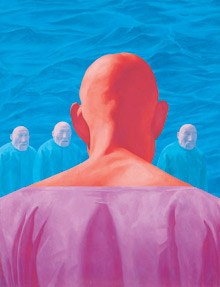
Mahjong: Contemporary Chinese Art from the Sigg Collection Fang Lijun: Untitled, 1995; oil on canvas
Chinese art has undergone enormous changes over the forty-year period from the Cultural Revolution to today. This transformation, at times glacially slow and at other times explosively fast, is represented at BAM/PFA this fall in artworks from the Sigg Collection, on view in the BAM Galleries, and in the films of Jia Zhangke and Ning Ying at the PFA Theater. In 141 works by ninety-six artists, the exhibition Mahjong: Contemporary Chinese Art from the Sigg Collection represents the historical span of art from the 1970s to today in China and demonstrates the dramatic evolution that has occurred, with artists exploring new materials and concepts far from what might have been imagined by even the most clairvoyant. As Chinese art emerged from the boundaries of state-sponsored and state-defined aesthetics to the complex initiatives of individuals with new intentions and motivations, it is possible to see the growth and development not only of art but of a nation. The broad range of the work in Mahjong demonstrates the evolution of contemporary Chinese art and artists from an adaptation of Western realism in the Soviet style through many twists and turns to its current international idiom. A very few years ago, artists included in the exhibition would have been known only to specialists in the field, yet today a good many of them are recognized broadly both in China and throughout the United States and Europe. Much of this recent recognition can be credited to the Swiss businessman and art connoisseur Uli Sigg and his persistent attempts to encourage Chinese artists and present their works on an international stage. In addition to collecting, in 1997 Sigg founded the Chinese Contemporary Art Award (CCAA) for artists living in China. Many of the artists featured in Mahjong have been instrumental in bringing about significant changes in Chinese art. The early artistic leaders of the late 1970s and the 1980s were not only creating art, they were creating an environment for a new way of thinking about art. The exhibitions, public performances, and ongoing dialogue among these artists brought considerable resistance from the government, which in some instances endorsed or allowed exhibitions to go forward at state-controlled sites only to later cancel, and occasionally close them within hours of opening.