Event

Woven Through TimePost an Event »

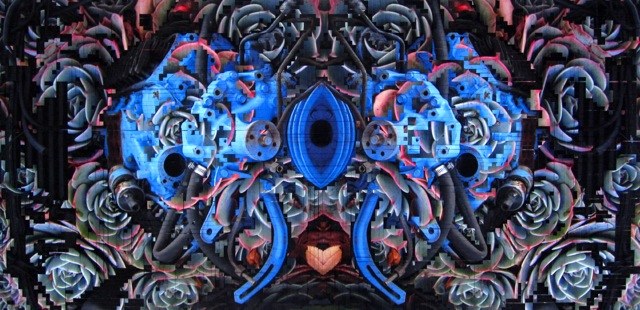
Woven Through Time Blue Engine woven photograhs, by Christy Kovacs (2012)
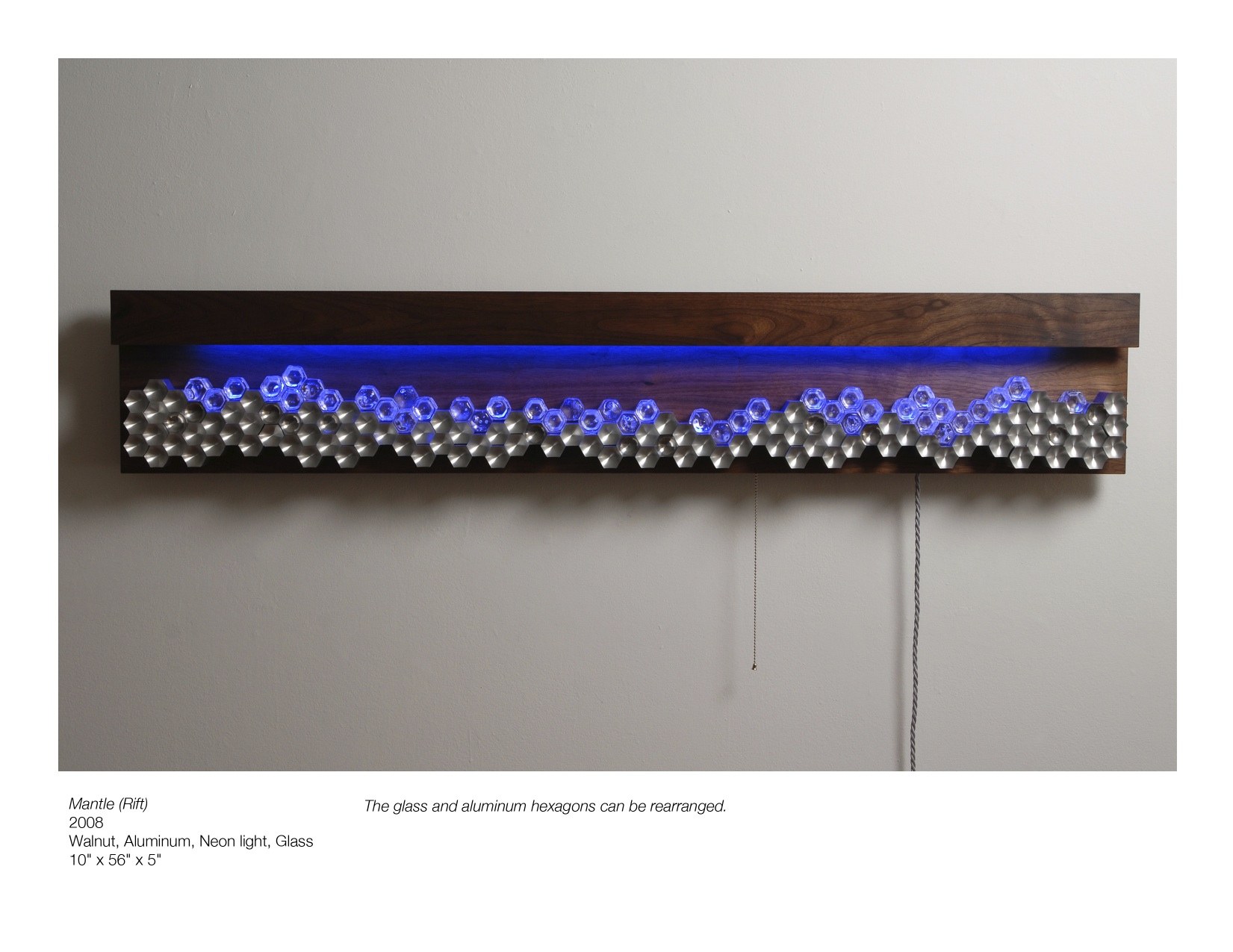
Group Show Celebrating National Women's Month Natalie Cartwright, Mari Marks, Beili Liu, Liz Koerner, Christy Kovacs, Allyce Wood "Woven Through Time" looks at the nature of women's art and craft considering historical development. Probing the notion of "woman's work" we examine subjects or methods traditionally dominated by men and how that influences woman's artwork, whether through subject or direct method /technique. Are these gender specific, reactive or political, and part of a larger environment? What remains, what is relevant to the viewer? Is there interconnectivity of woman's hand work and artwork? "My Engine Garden Series explores concepts of masculinity, femininity, and the animation of inanimate objects. In utilizing photography as my medium, a historically male-dominated medium, and employing it within the mode of weaving, a historically female-dominated craft, I am fusing together the worlds of fine art and craft allowing them to cohabitate the same tableau. As the “male” machine components and “female” flowers and leaves get physically and metaphorically woven together, a mating dance of imagery and gender unfolds before me. Gritty, black rubber tubes dive beneath delicate leaves; succulents bloom atop cold, engine blocks; electrical wires twist around slender stems. These once inert machines transform into dynamic, writhing, growing organisms seeming to evolve before our very eyes. From this marriage of engine and garden a frighteningly beautiful child is born: half machine, half plant, half insect, half alive, half dead. The mirror-image effect in many of my weavings creates a creature-like symmetry which naturally gives rise to faces, eyes, arms, legs, and mouths. Through this effect, the engines become anthropomorphized, furthering the feeling that these machines are, in fact, alive. I like to think of my weavings as little laboratories where I get to play with grafting stems onto metal tubing and splicing genes together to create hybridized creatures. In this way I serve not only as artist but also as scientist, engineer, and botanist—bringing my weavings into dialogue with the direction that science and technology is moving, towards the age of the “biological machine”. Creating new life through the act of weaving is no new concept, it is a repeating theme replete through creation myths from around the world. Grandmother Spider Woman, in the lore of the American Southwest, weaves the entire world from the threads in her belly. Plato had a vision of Ananke, goddess of necessity, weaving the universe using the sun, moon, and planets as her spindles. As women, we are quite aware of the potential our bodies have for creating new life, and as artists, we are doubly aware of our potential to create something out of nothing. When I weave, I feel connected to my inner potential for creation and feel a kinship with the goddesses who wove the universe. Yet, due to the back-breaking nature of my weavings, I also feel connected to the women through history that have labored over their looms and the giant weaving machines of the industrial revolution, surrendering their creativity to become machines themselves. The process for my photographic weavings involves cutting, with scissors, one photograph horizontally and another photograph vertically and then weaving the two images together. There is no “pattern” to my weaving, rather, I weave depending on which elements of each image I want revealed or hidden. I feel that this delicate method of interlacing images is much more intimate than the layered gluing of collage or the digital manipulation of a Photoshop composite." - Christy Kovacs "Our vulnerability to the larger forces of nature inspires me to design objects that suggest a personal connection to material movement and transformation. In my work geologic processes such as sedimentation, tectonic shifting and thermal flow are explored as physical principles that resonate with a subconscious landscape. Through abstracted natural forms I intend to trigger a sense of possibility and a regard for the nuances of deep reconfiguration and metamorphosis. Mantle (Rift) and Cavern (Precipitate) play on the action of stacking and the optical effects of glass, aluminum, and light. By leaving unfixed elements to be changed by the viewer, I invite participation in a dynamic space and create the intimacy to be lost in wonder of something elusive and familiar." - Liz Koerner "My work is based upon my empathy for contemporary as well as historical environmental degradation. Subjects such as fleeting populations or the awe of natural resources are depicted through a variety of mediums such as wall-based arrangements of hand-cut paper, textile pieces, paper sculpture, and prints (made by a wide variety of techniques). Heightened detail, color accuracy, and overall finessing of the work is necessary as it describes not only the difference between our species and those hunted/agriculturally cultivated, but why such elements are coveted. It is my goal to select the production method that is most appropriate to the subject; my practice begins with an inspiring piece of journalism or observation. I then allow the material combination to inform the aspects of the narrative I’ve prioritized. The material selected is intended to reflect upon the fragile and emotional impacts of each narrative; temporality of construction is often a reminder of the tenuous existence of those being depicted. My background in printmaking and is sculpture has given me insight into both the classical approaches to art production, which I utilize with a clean aesthetic and clarity of line, and the contemporary view of display, which lends itself to creative ‘anti-vitrine’ sculpture. It is through these venues that I come to show fragile work exposed to the viewer, allowing for intimate visual experiences." - Allyce Wood Located in Oakland's Downtown Arts District Gallery Hours: Tuesday through Saturday, 11-6PM
Woven Through Time Mantle (Rift), Walnut, aluminum, glass, neon light, 10" x 56" x 5" by Liz Koerner (2008)