Event

Mood Swing: How color affects emotionPost an Event »

Mood Swing: How color affects emotion
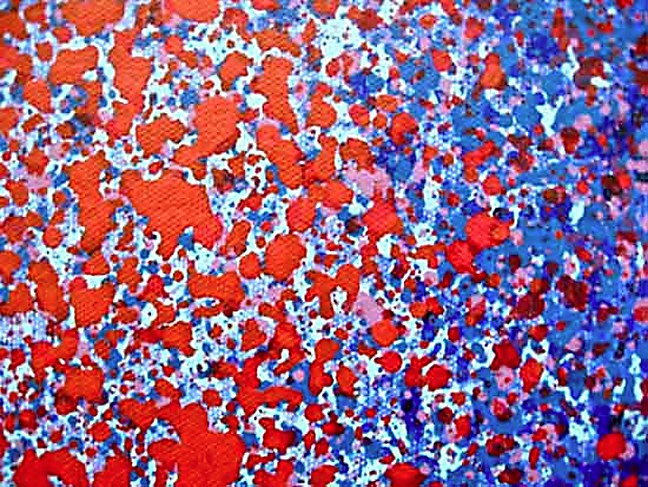
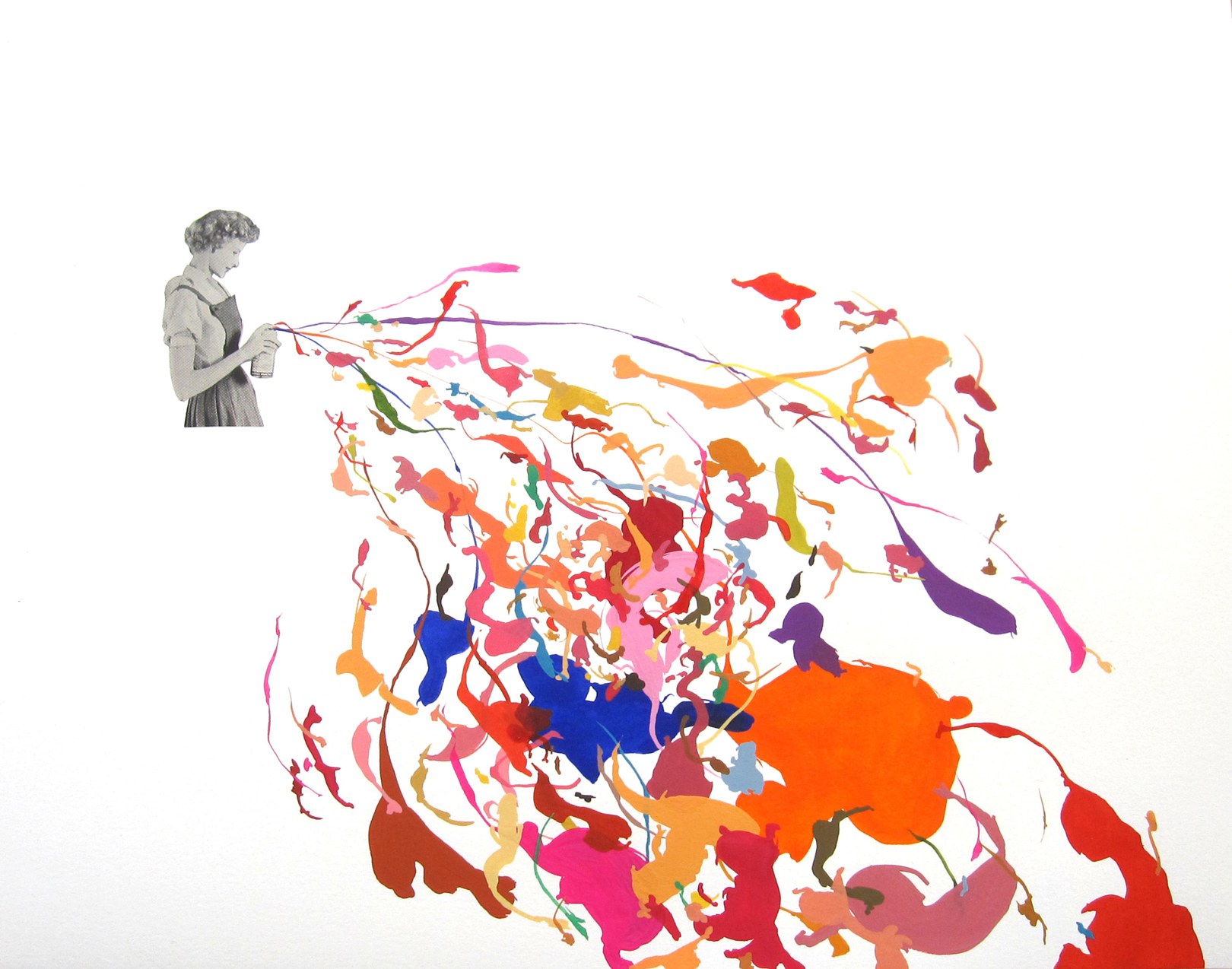
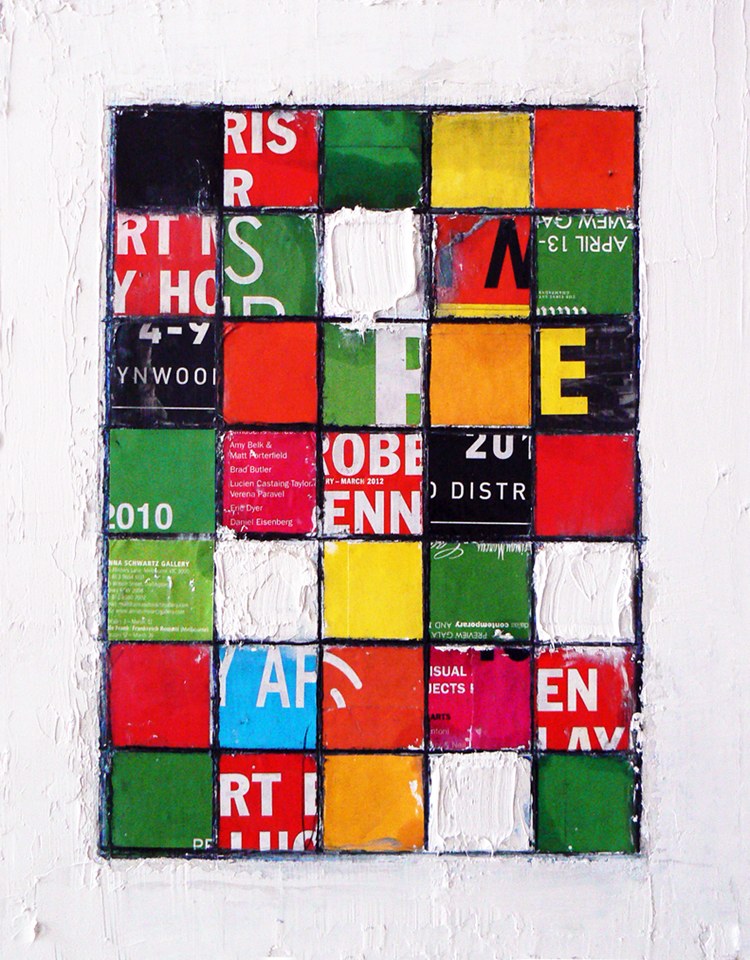
Exploring color and its absence, artists Elizabeth Amento, Theodore Knox, Alex Garcia, Chico Coelho, and Jeffery Thompson present, “Mood Swing: How color affects emotion,” a group show at a.Muse Gallery from September 1 to November 6, 2012. There will be a public reception with the artists on Saturday, September 15 from 6:30–9 pm.  Admission is free.  How do colors affect our moods?  Can looking at a colorful piece of art make us happy? Do gray tones make us feel blue? This fall's exhibit at a.Muse asks these questions and gives the spectator the chance to reflect on their own experience.  Through November 6, the gallery will showcase dazzling hues through the paintings of Elizabeth Amento and Chico Coelho, as well as the color punctuated assemblage work of Alex Garcia and Jeffrey Thompson.  The gray-toned, manipulated prints of Theodore Knox provide startling contrast, giving the viewer an opportunity to reflect on their visceral and emotional response to these differences. Working with the relationships between color and negative space, intimacy and expansion, stability and chaos, these five artists ignite a spectrum of human emotion. The result is an exhibit that celebrates both creativity and our response and participation with it. The idea was born when Shantzis stepped back to look at her deeply emotional response to the black and white work of mixed media artist Theodore Knox.  She describes the work as “startling” although it is created from packing tape and Xerox transfers. On the same day she visited the highly colorful splatter paintings of Brazillian artist, Chico Coelho.  Her response was again strong, but completely different from her response to Knox’s work, “So I decided to take some time to explore that difference,” she recalls.  Knox says he chose to work with black, white, and grey tones intentionally because he “wanted them to refer to a history and an aging process, like a still from a Muybridge film. There is a quality to images that use that tonal range that drives me inward into my emotions to a place of examination and introspection.” Later in the week, she saw the work of Elizabeth Amento, which is very playful and colorful but is also anchored by black and white cutouts from old women’s magazines. This young artist pairs wild, sensual shapes in bright, almost neon colors with simple, yet somehow sardonic images of idealized woman. “My work is about relationships,” says Amento, “between people, between colors--the energy imbued in moments.” According to Shantzis, the result of Amento's technique is "a delightful balance," which she hopes to achieve by curating a show that explores a variety of approaches to color. To this end, Shantzis invited Argentinian artist Alex Garcia into the mix.  In his colorful, mixed media mosaics, primarily in wood, Garcia attempts to “tell a story” where one primary found object is “the protagonist” and the rest of the pieces are more like “supporting actors” or other elements in something like a film or theatrical production. Color, for him, both represents motive and emotion, as well as sets the scene for the overall narration. Garcia’s work is well-known and loved in the city for his use of reclaimed wood which he both uses as is, as well as lusciously stains to give his pieces the effect of a patchwork quilt. Jeffrey Thompson’s collage work has a similar patchwork theme, but is presented in tight grids.  Thompson's art relies heavily on regularity where Garcia’s compositions are both structured and seemingly whimsical and haphazard.  By including both of these artists in the show, Shantzis hopes to further delve into the variety of responses elicited by visual art. Thompson’s approach to color stems primarily from printmaking where, according to the artist, it plays a clearly defined role. “In that system black is often the key element. It sets the tone for the entire piece. It serves to balance and delineate the rich colors and stark whites, and provides a resting place for the eye.” 

Mood Swing: How color affects emotion