
Event
Signal ShiftPost an Event »
Casemore Kirkeby
November 6 - January 9, 2016Info
- www.casemorekirkeby.com
- 9785004093
#102 San Francisco, CA 94107 Google Map »
Reception
November 6, 2015 6:00 pm to 10:00 pm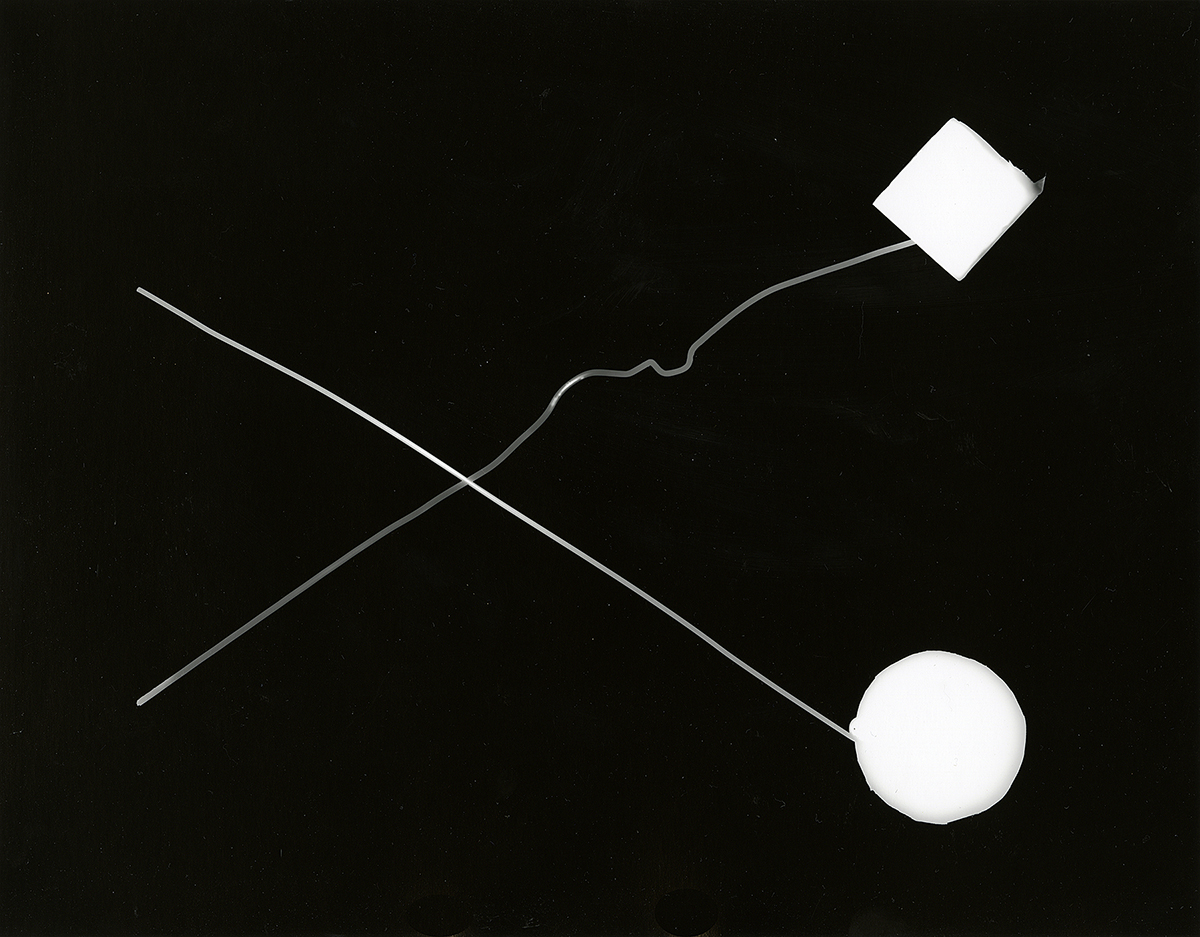 Aspen Mays, Dodge Photogram #4, 2012. Unique gelatin silver print, 8 x 10 inches.
From Morse code to binary code, signals can form the basis of meaningful communication, as well as the fabric through which information is transmitted and received. New uses of tools and media both outmoded and advanced can cause simple, sometimes nearly imperceptible, shifts in these signals—changing both the content and the context of their messages. The three artists presented in this exhibition modify the tools and techniques used to capture, process, and present photographic imagery, reorganizing the events or phenomena they record to invite new questions, not only about the mysteries of their making, but the unknowability of the worlds in which they float.
Brittany Atkinson moves seamlessly between the digital and the analog, the computer-generated and the handmade, interested in what is lost or gained in translation. She records happenings on the screen of her computer with a hand scanner, scrolling through shape and color and making purposeful motions across the screen. The results are printed on paper, layered together and molded into forms, then re-scanned and printed once more—either digitally or as traditional gelatin silver prints from a digital negative. The prints exist as material objects in a flattened digital space, with patterns that seem to hover between the familiar and the arcane. Atkinson’s process conflates gestural mark making, the erratic behavior of digital interference, and her own thoughtful manipulations, conjuring up textile-like patterns—strange fingerprints from some netherworld of information.
Aspen Mays’s photograms of roughly hewn dodging tools resemble petroglyphs. These images wryly decouple the tools from their original purpose of invisibly shaping and controlling light so they become clearly seen, their forms sharply rendered and strange, almost anthropological. In Untitled (fireflies inside the body of my camera, 8:37-8:39 PM, June 26, 2008), Mays harnesses the bioluminescence that fireflies use to signal potential mates or enemies by placing the fireflies inside the body of her camera, directly exposing the film to their light. In printing out the result, Mays transmutes the light into a solid color field—a new signal for a new audience. For Mays, with her background in anthropology, photography is both an exploratory tool and a distinct way of knowing that she playfully musses up, drawing attention to both its limitations and still potentially untapped powers.
Sean McFarland works in a middle ground between the factual and the fictional, the found and the created to form a sort of visual almanac of a world just on the edge of existing. McFarland makes landscapes with a Polaroid camera, exposing the film multiple times to create patterns. But the impossibility of the image is at odds with the Polaroid’s identification with authenticity and direct experience. For this exhibition, McFarland also features new works on newsprint—a delicate medium that yellows over time. The images are thus constantly shifting, inspiring a meditation on the mutability of the thing pictured and a photograph’s influence on memory, both as a vestige of fading experience, and as a living thing that changes each time it is viewed.