Event
The Poetry of Time: Andrei TarkovskyPost an Event »
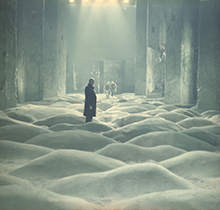
“Artists are divided into those who create their own inner world, and those who recreate reality,” wrote Andrei Tarkovsky. “I undoubtedly belong to the first.” Born in 1932, the son of a prominent poet, Tarkovsky turned to cinema to capture “that most captivating quality of all art,” the “unspoken elusiveness” of feeling and dreams rather than the dull reality of language, story, or genre. "Tarkovsky is for me the greatest,” wrote Ingmar Bergman, “the one who invented a new language, true to the nature of film, as it captures life as a reflection, life as a dream.” Fittingly for an artist who came of age during an era of Soviet double-speak and manipulation of facts, Tarkovsky distrusted words and traditional narratives as tools of creation. “Words are too inert to express emotion,” notes a character in The Mirror. Genre? “As cold as the tomb,” Tarkovsky wrote. Even the quick-cut editing style of most filmmakers introduced too much control; “it leaves no ‘air’,” he wrote of Eisenstein’s fast-paced montage. The long take became Tarkovsky’s primary mode of expression, the tool in which he could begin “sculpting in time” (to borrow from the title of his book on cinema) and allow viewers the freedom to breathe. Yet earth, wind, water, and fire infuse all aspects of his imagery, grounding metaphysical visions and emotions in a literally elemental sense of the natural world. Inspired by the writers and artists of his beloved Russia (and by Dostoevsky above all), Tarkovsky finally fled the Soviet Union in 1984, after years of government censorship and interference. He died only two years later, leaving behind a body of work that has only grown in power and influence. “Art must transcend as well as observe,” he wrote; “its role is to bring spiritual vision to bear on reality.” The Soviet Union has long since faded, but Tarkovsky’s art remains.